
“When you serve as a missionary, you automatically become an interpreter,” says the Rev. Philip Wingeier-Rayo, a fourth-generation missionary and author of The Bible Through the Eyes of John Wesley. “One comes and goes between cultures and languages.”
The lessons in Wingeier-Rayo’s latest devotional resource grew out of the fifteen years he and his wife spent serving as missionaries in Cuba, Nicaragua, Mexico, and the Rio Grande Valley. In Cuba, the church met almost every day: Sunday worship, Bible study, youth groups, women’s and men’s groups, classes for new members, and new mission outposts. He taught in many of those settings, but when he looked for materials during his trips to the United States, he rarely found Spanish resources that also reflected the Wesleyan tradition.
About the book
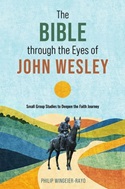
The book first appeared in Spanish as La Biblia Atraves de los ojos de Juan Wesley and is now available in English. The Rev. Philip Wingeier-Rayo hopes it will reach congregations in both languages. The devotional is published by Upper Room Books, a ministry of The UMC’s Discipleship Ministries
How to use the book in your church
The study is designed for a pastor, Sunday school teacher, lay leader, or small group coordinator to facilitate. It can be used for a men's group, women's group, youth, new believers, and people in recovery, in classrooms, coffee shops, or at home.
Wingeir-Rayo offers these suggestions:
- You don't need to commit to the full 52 weeks. The lessons are organized into five- or six-week blocks. “If you offer a shorter timeframe, people are more likely to commit,” he said. A six-week block can serve as a Lenten study option or a summer class.
- Plan 60- or 90-minute sessions. Longer time will allow for deeper group discussion.
- Prepare in advance. Read the lesson and the Bible verse, and pray. Check whether you need markers, paper, a flipchart, or a whiteboard. Ask the participant to bring their Bibles, paper, and pencils.
- Create a safe space. The questions may touch upon participants’ personal histories and their relationships with Jesus Christ. In an environment with distractions or without privacy, people find it harder to open up.
- Try to keep the same group together throughout the journey. Consistency builds trust.
Extending Wesley’s teachings
Wingeier-Rayo adapted what was available: He translated English materials or adjusted Baptist, Catholic, or Pentecostal resources to fit Wesleyan doctrine. He explains, "In the end, I decided to write my own lessons.”
At first, they were handwritten notes: an outline of a passage and its main idea, all on a single page. Over the years, the lessons grew, and his wife encouraged him to publish them.
"I shrugged and said, 'Nobody’s going to want that,'” he recalled. But the stack kept growing and accompanied him from country to country, until he submitted a proposal to Upper Room Books for a Spanish-language resource.
The newly translated English edition came about following a request from Hispanic pastors who were already using the book. They explained that their young people did not read or write in Spanish and that many couples were from different cultural backgrounds. In many Hispanic congregations, he noted, the "1.5 generation" prefers English. In the translation process, he sought a middle ground, remaining faithful to the original while incorporating "certain hermeneutical adjustments," with careful consideration of who would use the material and in what context.
What groups will find
Each lesson follows the same format: a biblical passage and a key verse, an introduction, the lesson itself, discussion questions, and a closing prayer. The lesson draws upon what Wesley himself wrote in his Explanatory Notes upon the Old and New Testaments, sermons, letters, and journal.
The book aims to help participants learn the Bible and Wesleyan theology at the same time. Wingeier-Rayo shares, "In essence, it is reading the Bible through the eyes of John Wesley.”
It begins with a brief introduction to the life of John Wesley and the Methodist revival in
18th-century England. It is then divided into two parts. The first, "The Old Testament and the Law," proceeds chronologically from the Creation, the Fall, the Tower of Babel, and Noah to God’s covenant with Abraham and beyond. The second, "The New Testament and Grace," explores New Testament passages following the Wesleyan path of salvation.
Grace for those who feel unworthy
Although the stories in the book come from different countries, the common thread is the human experience. In every place where he served, Wingeier-Rayo encountered people burdened by shame—whether due to a divorce, an arrest, or an act of infidelity—who were convinced that they did not deserve to return to church or approach Holy Communion.
The book responds by posing the question Paul asks in Romans 8: What could separate us from the love of God? "My answer is that nothing has separated us from the love of God," says Wingeier-Rayo. "This is a universal human story about sin, grace, and the love of God."
He also corrects the notion that salvation only comes after death. He explains, "We experience the fruits of salvation here and now." Starting today, we can live in the joy, hope, and certainty of being sons and daughters of God.
That same grace frames the Wesleyan understanding of baptism. "For Methodists, baptism is merely the beginning of our journey of faith," he offers. We will always have to deal with sin and failure, he adds, which is why we must continue to grow in grace.
Reestablishing small groups
For Wingeier-Rayo, the book is also an invitation to recover something that Methodism has lost. He says, "One of the secret ingredients of the early Methodist movement was small groups."
Wesley organized classes, bands, and societies. Today, by contrast, many people only attend Sunday worship. Wingeier-Ray asks, "How often are we asked about our own faith journey, about our own struggles?"
The need is urgent. He mentions the epidemic of loneliness in our culture, with older people feeling alone in their homes, and younger people engaging more with their screens than with one another.
He says, "I hope this resource can bring people together, create community, and foster intimacy. People are hungry for community."
The Rev. Juan Marcos Garay is a Puerto Rican pastor and church planter with 25 years of ministry experience, currently serving Grace Community United Methodist Church in Lithia, Florida. His ministry emphasizes mentoring young people, accompanying immigrant families, and building communities rooted in Christ’s love. This page was published on November 12, 2026.