

DAYTONA BEACH, Fla. — “The Black College Fund (BCF) is an incredible lifeline for many of our HBCUs,” says Rev. Dr. Albert Mosley, the eighth president of Bethune-Cookman University. “More than that, it is the strongest testament of the church in higher education for an underrepresented population.”
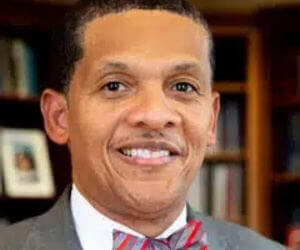
The fund, administered through the General Board of Higher Education and Ministry, provides annual support to 11 Historically Black Colleges and Universities (HBCUs) affiliated with the denomination. In addition to regular BCF distributions, Bethune-Cookman, located in Daytona Beach, Florida, also received $275,000 in capital funds in 2025, which were critical for replacing the roof on the Performing Arts Center after repeated storm damage, Mosley said.
“Because the BCF funds are unrestricted in nature, we are able to use them to fund scholarships or fill whatever the greatest need is,” said Mosley, who was inaugurated as president on April 14 during an Investiture Ceremony. “They are a blessing to the bottom line and allow us to be better stewards of the resources under our care.”
Bethune-Cookman has used BCF dollars to help maintain access and affordability, including scholarships for United Methodist students and a pipeline program to Gammon Theological Seminary. “BCF dollars are crucial because they free up revenue in other areas for scholarships,” Mosley said.
Founded in 1904 by Mary McLeod Bethune — the only Black woman to establish a college — Bethune-Cookman has long embodied the Methodist commitment to education. “This act is really who we are as Methodists—ensuring access to higher education,” Mosley said. “Even today when we are facing such historic challenges.”
Mosley calls Bethune’s legacy “a true testament for what can be done through faith and courage.” Her vision continues to inspire the university’s mission to educate and empower. Today, Bethune-Cookman enrolls over 3,000 students and is seeing an uptick in applications as families seek “safe spaces” amid cultural and political tensions.
“HBCUs are in the thick of the culture wars,” Mosley said. “Florida is home base for those wars. Parents are sensing and affirming that HBCUs are safe spaces for their students.”
Under Mosley’s leadership, B-CU has launched several key initiatives, including B-CU Global, an online academic division designed to expand access to degree programs for learners nationwide, and BCU-Futures, introducing eight new academic programs aligned with emerging workforce demands in disciplines like applied AI, cybersecurity, digital marketing, e-sports/gaming administration, and several others. These new programs will complement the school’s liberal arts foundation. But he says the ability to adapt and thrive depends on continued support.
“Without Black College Funds, our work would be harder and our reach smaller,” Mosley said. “With them, we can keep building futures.”
About the Black College Fund
The United Methodist Church expands access to quality education through the General Board of Higher Education and Ministry and the Black College Fund, supporting 11 affiliated Historically Black Colleges and Universities. As the largest church-based supporter of HBCUs, the fund provides essential resources for capital improvements, innovative programs, operating expenses, and initiatives that strengthen student success and institutional vitality.
11 Schools, 1 Call: How the BCF Sustains our HBCUs
This content was originally published by The General Board of Higher Education and Ministry; republished with permission by ResourceUMC on April 29, 2026.